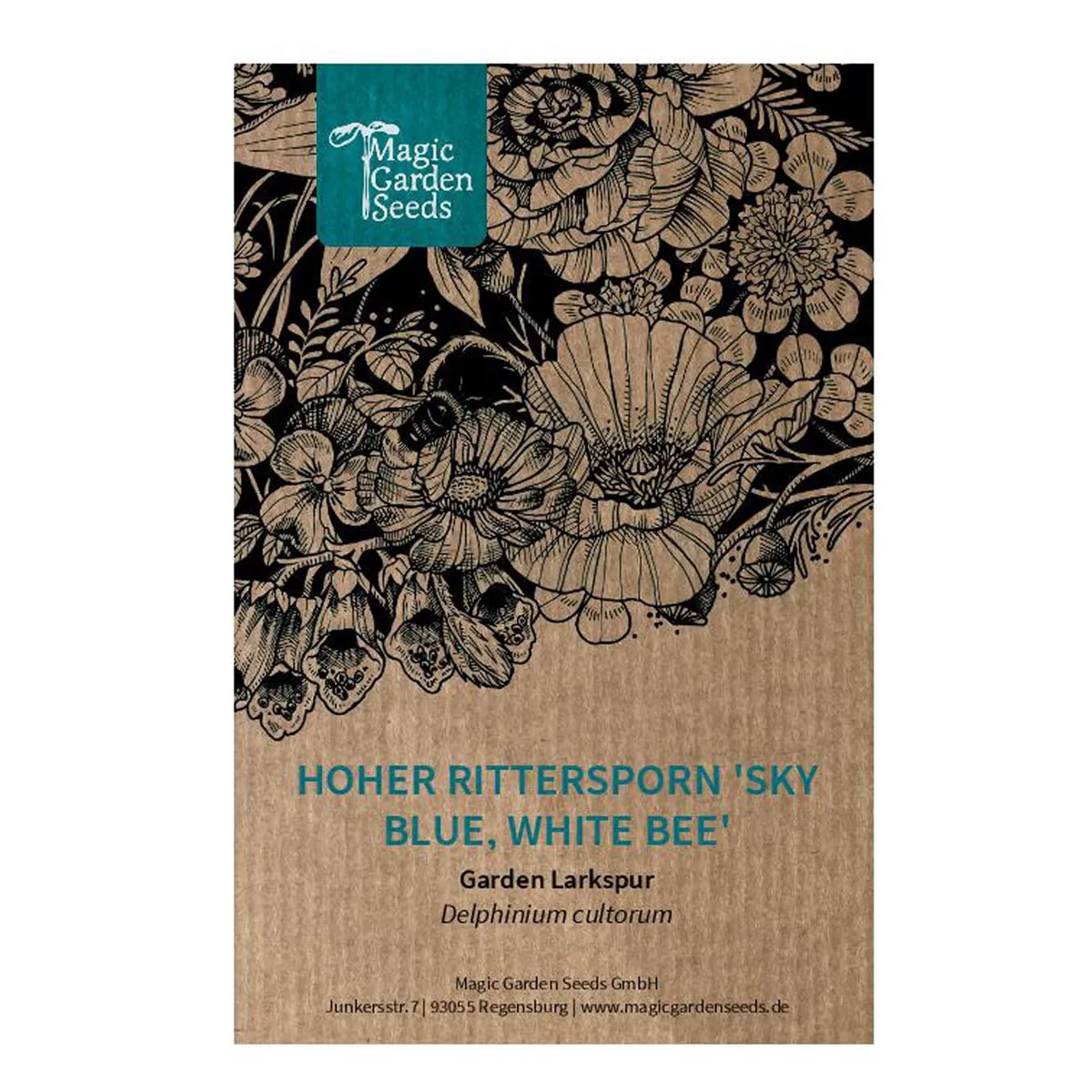
Dauphinelle 'Magic Fountains-Sky Blue, White Bee' (Delphinium cultorum) graines
- Contenu: env. 10 graines
- Variétés de graines résistantes, facultée de germination régulièrement testée
Prix régulier :
2,59 €
Réf. produit : DEL03 GTIN: 4251420518156
Description
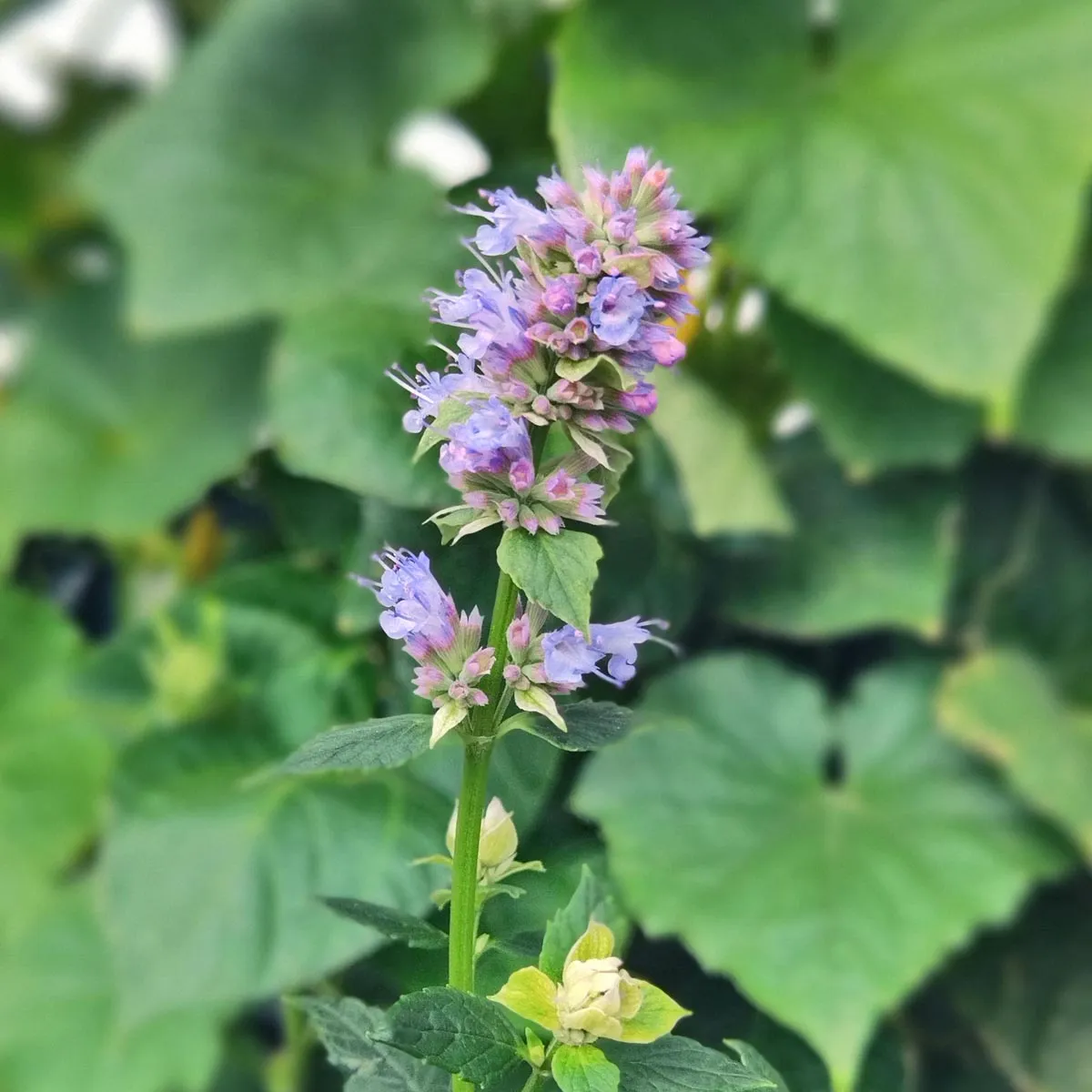
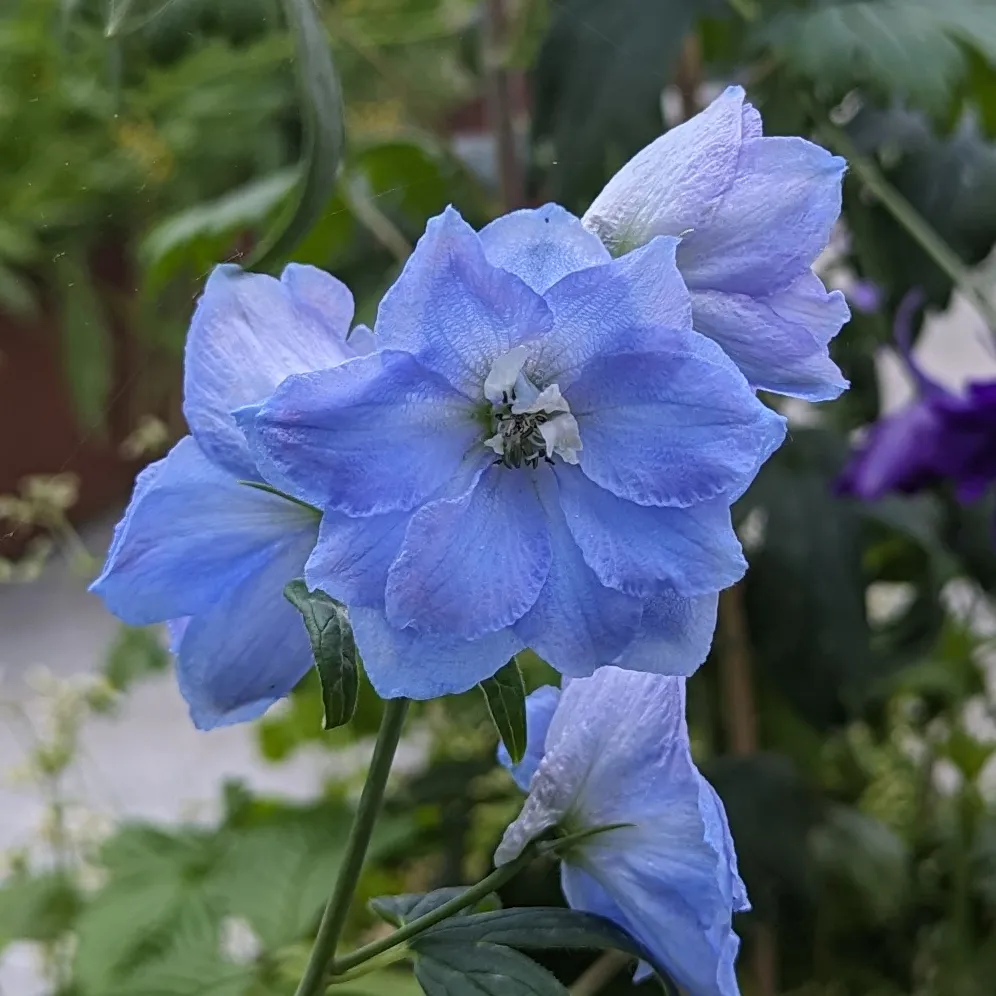
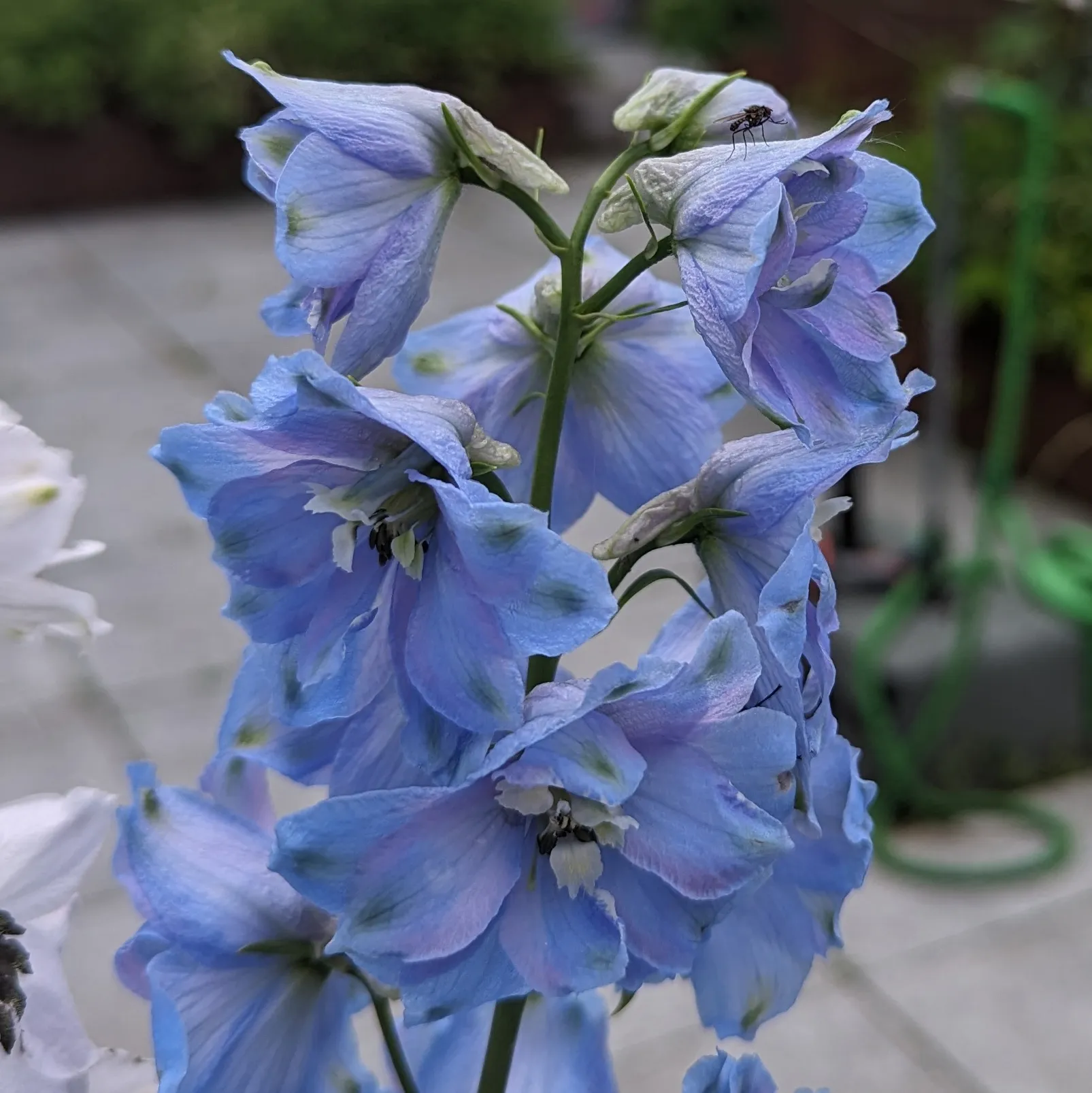
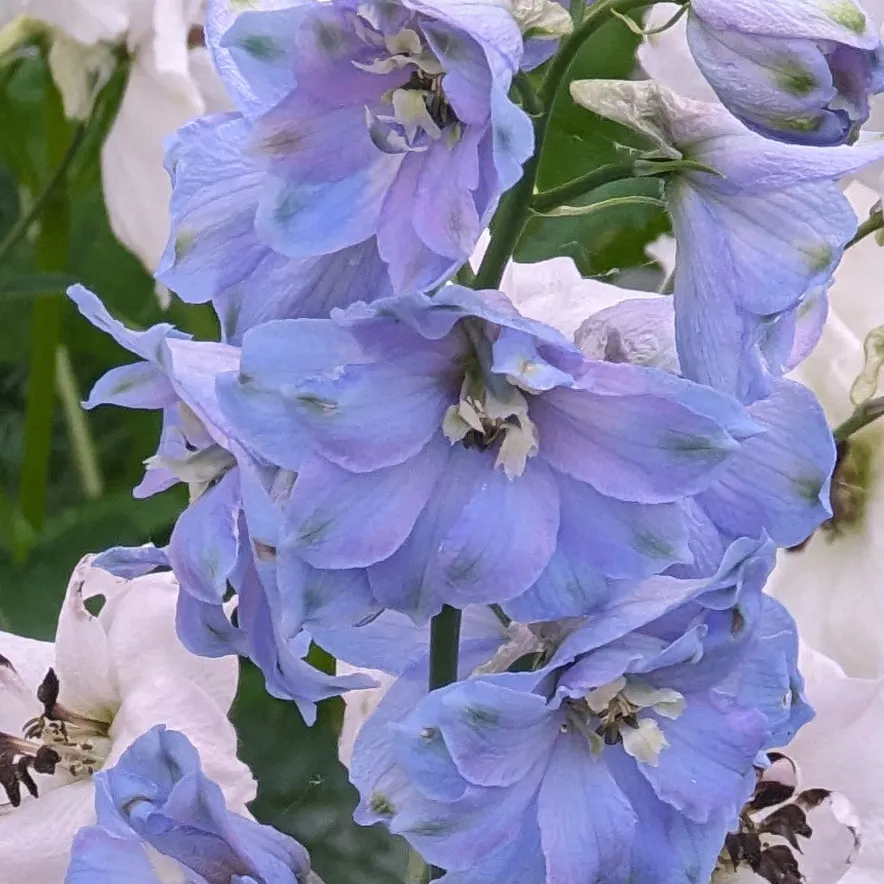
The variety 'Sky Blue, White Bee' is a beautiful cultivar of the Garden Larkspur. The blossoms appear baby-blue with a white blossom eye.
This garden larkspur variety belongs to the pacific type from the breeding group Magic Fountains. All associated varieties reach 80cm in height and, for this reason, remain rather small. That has the great advantage that the heavy inflorescences don't snap as easily as it may happen with the very high varieties. It, moreover, forms especially strong stalks and pleases with very green, bright foliage, which appears very beautiful in contrast to the blossom colour.
The garden larkspur has been cultivated since 1578 and belongs to the very classic, traditional decorative plants. Originally, it has been native to the Mediterranean region, respectively in some areas of Asia. There, it can be found in light forests, creek banks, moist rock heaps, and subalpine tall herbaceous vegetation until heights of up to 2000 metres. Its preferred location in the garden is especially warm, wind-protected, and sunny. However, the garden larkspur needs a shaded foot. Therefore, planting partners in direct proximity, which can provide enough shade, are recommended, for example, peonies, daylilies, or oriental poppy. If you cut the inflorescences back up to 20cm after the first blossom, it's likely to bloom a second time in late summer. These inflorescences can be left as it will then sow itself.
Garden larkspur is a must for the cottage garden and the splendid shrub bed. It's a very beautiful rose companion and grows well in the plant tub. Unfilled varieties are great honey plants. The inflorescences are tolerant to cutting and durable for the flower vase. Indeed, they can be dried well to continue to use them as dried flowers. Last but not least, you should absolutely know that all parts of the garden larkspur are very poisonous. For sure, due to some of the substances responsible for this, the plant had a short career as a medicinal plant. However, these days, this is only shown by the homeopathic remedy anymore.
Fiche de la plante
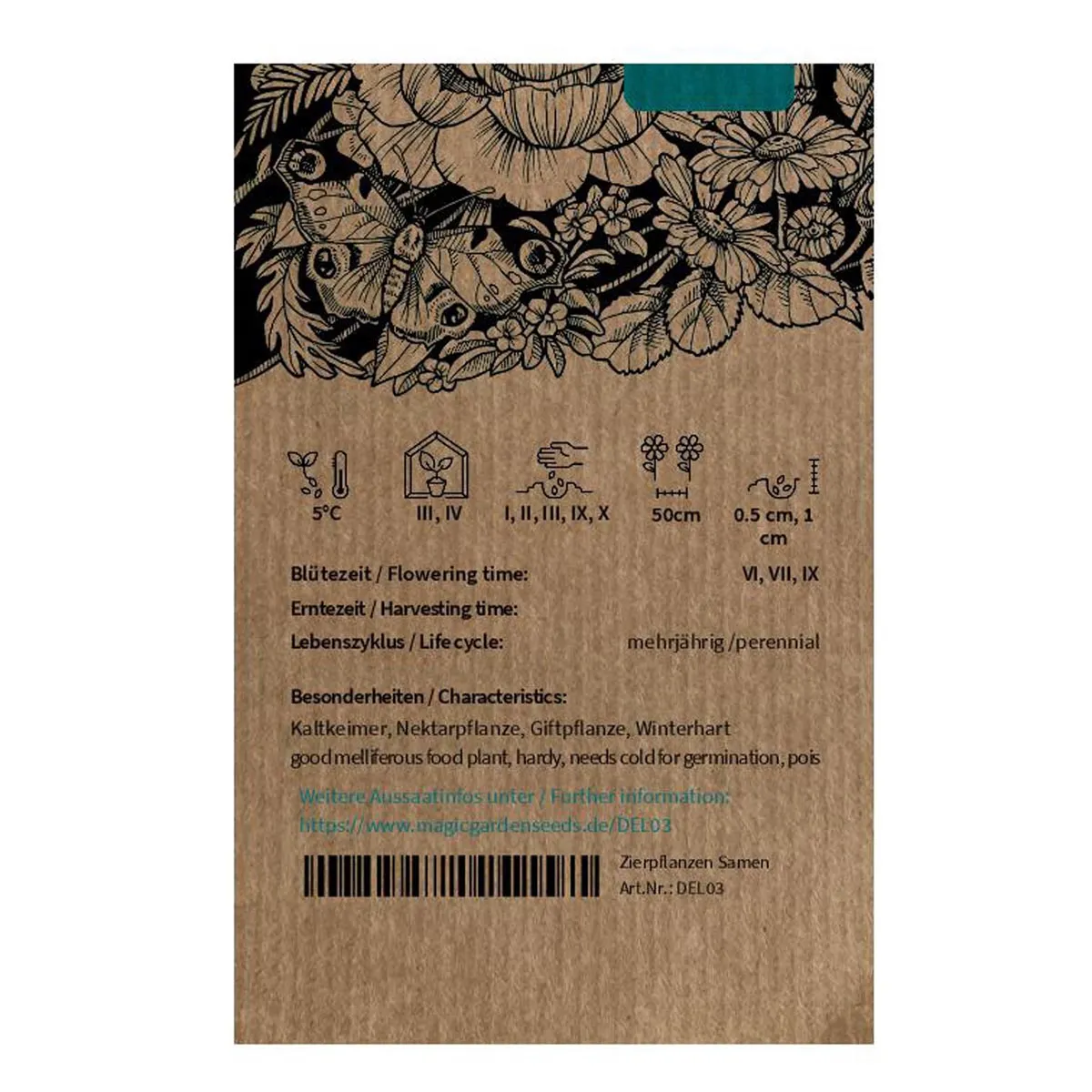
| Identification des plantes | Plante en bac, Plante vivace / herbacée |
|---|---|
| Mode d'emploi | Bonne plante nourricière pour les insectes, Fleur coupée, Fleur séchée, Plante d'ornement, Plante en bac, Plante médicinale |
| Cycle de vie | Pluriannuelle |
| Espèce | Ranunculaceae |
| Reproduction des semences de graines | Production conventionnelle |
| Région d'origine | Asie, La région méditerranéenne |
| Caractéristiques | Germe à froid, Plante méllifère, Plante toxique, Résistante à l'hiver |
| Hauteur de croissance | 40-80 cm |
| Couleur des fleurs | Bleu |
| Période de floraison | Juillet, Juin, Septembre |
Conseils de culture
| Période de semis en pleine terre | Février, Janvier, Mars, Octobre, Septembre |
|---|---|
| Profondeur de semis | 0.5 cm, 1 cm |
| Température de germination | 3-5°C |
| Durée de germination | 2-6 semaines |
| Climat | Tempéré |
| Type de sol | Calcaire, Humus, Perméable, Profond, Riche en nutriments |
| Ensoleillement | Ombre, Plein soleil |
| Besoin en eau | Haute |
| Besoins en éléments nutritifs | Plantes à forte croissance |
| Distance de semis | 50 cm |
Semis et entretien
Mehrjährige Staude, Kaltkeimer: Aussaatzeit im Freiland zu Beginn des Frühlings oder im Herbst. Ersatzweise ist eine künstliche Kältebehandlung der Samen im Kühlschrank (Stratifikation) möglich. Hierzu werden die Samen mit etwas feuchtem Aussaatsubstrat (besonders gut geeignet ist Kokoserde) vermischt und in Plastikbeutel gepackt. Da die Plastiktütchen wasserdicht sind, muss normalerweise nicht nachbefeuchtet werden. Anschließend werden die befüllten Beutel zunächst für 2-4 Wochen an einen etwa 20°C warmen Ort gestellt. Danach kommen die Tütchen in den Kühlschrank.
Der Kühlschrank muss dafür möglichst kalt eingestellt sein: 5°C oder etwas weniger ist ideal. Die Samen sollten regelmäßig (einmal wöchentlich) kontrolliert werden und sobald die Keimung beginnt wie gewohnt in Töpfe ausgesät werden. Aussaattiefe: 0,5-1cm. Die Jungpflanzen können ab MItte Mai ins Freiland gestzt werden.
Autres noms
Nom botanique: Delphinium cultorum
Allemand: Hoher Rittersporn, Pazifischer Rittersporn, Garten-Rittersporn, Bergrittersporn, Hochmut
Anglais: Garden Larkspur, Garden Delphinium
Français: Pied d’alouette, Dauphinelle
Évaluations
Connexion
Aucun avis pour le moment. Serez-vous la première à écrire le vôtre ?