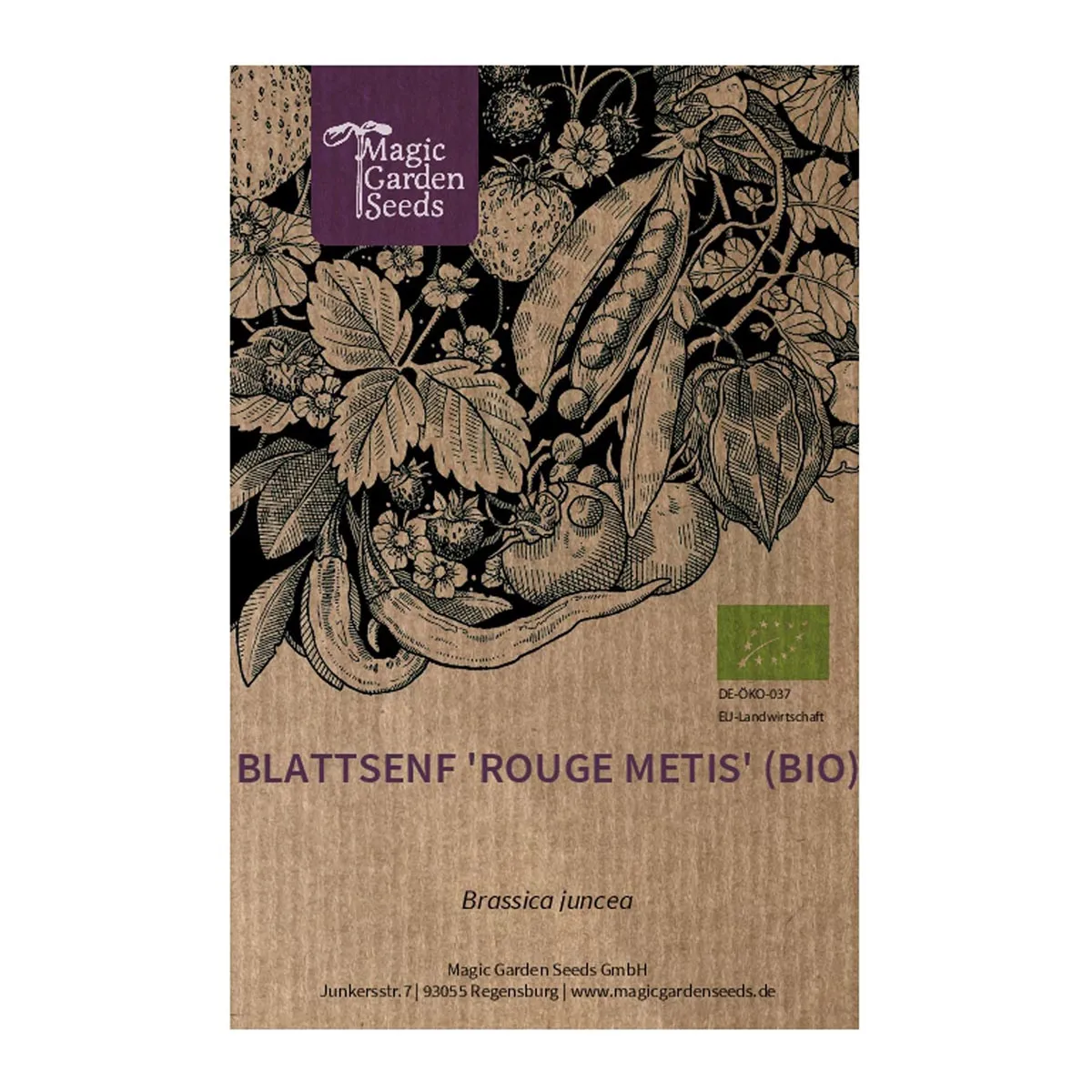
Moutarde 'Rouge Metis' (Brassica juncea) bio semences
- Légume asiatique à feuilles piquantes de couleur violette.
- Contenu: env. 180 graines
- Variétés de graines résistantes, facultée de germination régulièrement testée
Prix régulier :
2,49 €
Réf. produit : BRA17-BIO GTIN: 4251420517265
Description
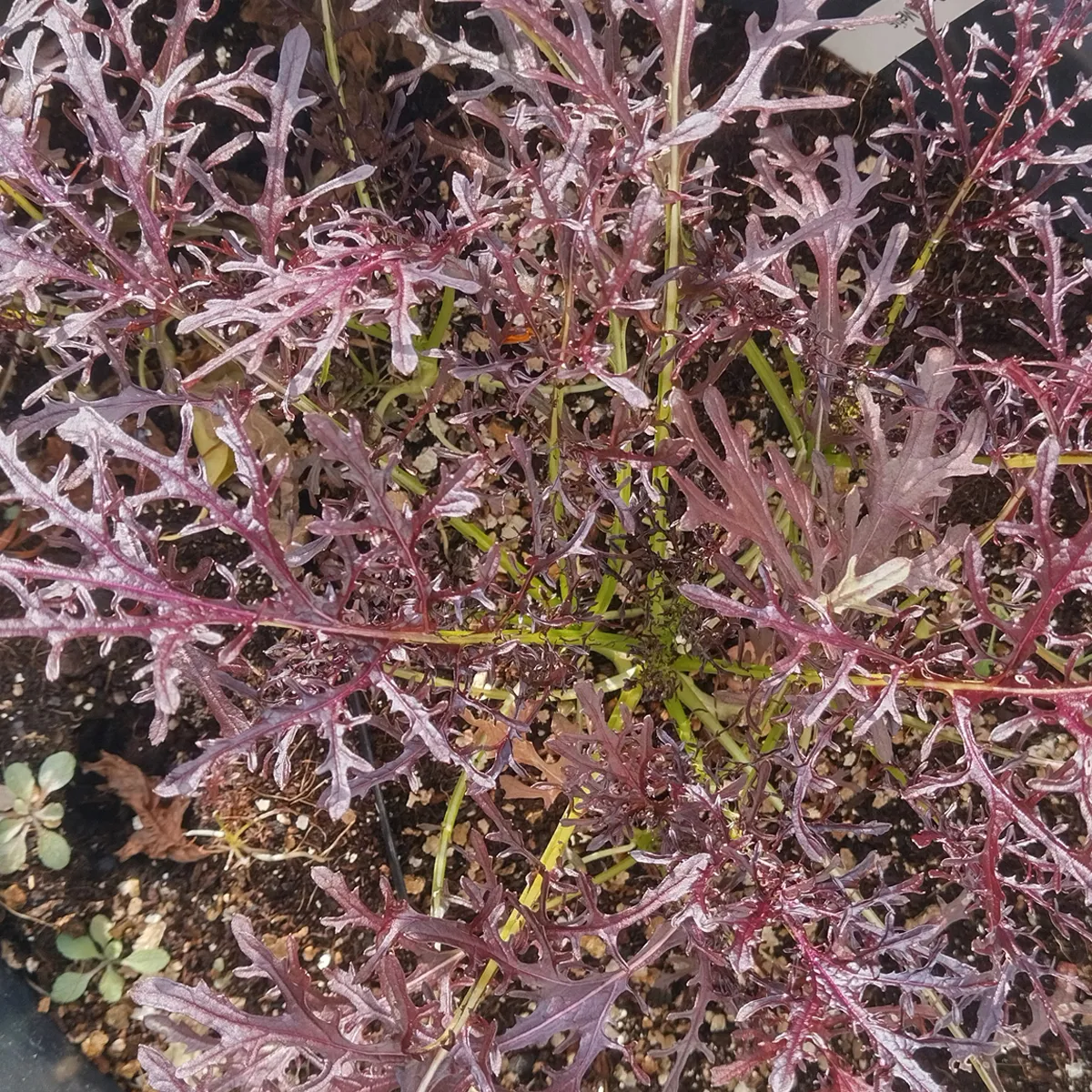
Rouge Metis' is an especially beautiful mustard green. Its flavour is somewhat milder than other varieties. Excellent as a salad or stir-fry vegetable.
Mustard greens are one of the easiest vegetables for your garden. The most important thing to consider is the planting time. It does not like heat and is therefore planted either very early or very late in the year. Frost does not bother it, so it can also provide you with fresh greens in the winter.
The deeply serrated, "feathered" leaf shape is not only attractive but also holds sauces and salad dressings particularly well.
Compared to other mustard green varieties, which can sometimes be very spicy, 'Rouge Metis' is relatively mild. However, under heat and water stress, this variety can also develop considerable spiciness, reminiscent of horseradish.
Due to its relatively compact growth, this "Asian vegetable" is also great for pot culture or raised beds. Diseases or pests are hardly a problem, as they probably do not like the mustard oils it contains.
The leaves keep growing back and can be harvested for several weeks. Even in the shade, growth is quick, but the violet-red colour develops more with sunlight.
Fiche de la plante
| Mode d'emploi | légume, Légumes d'hiver, plante comestible |
|---|---|
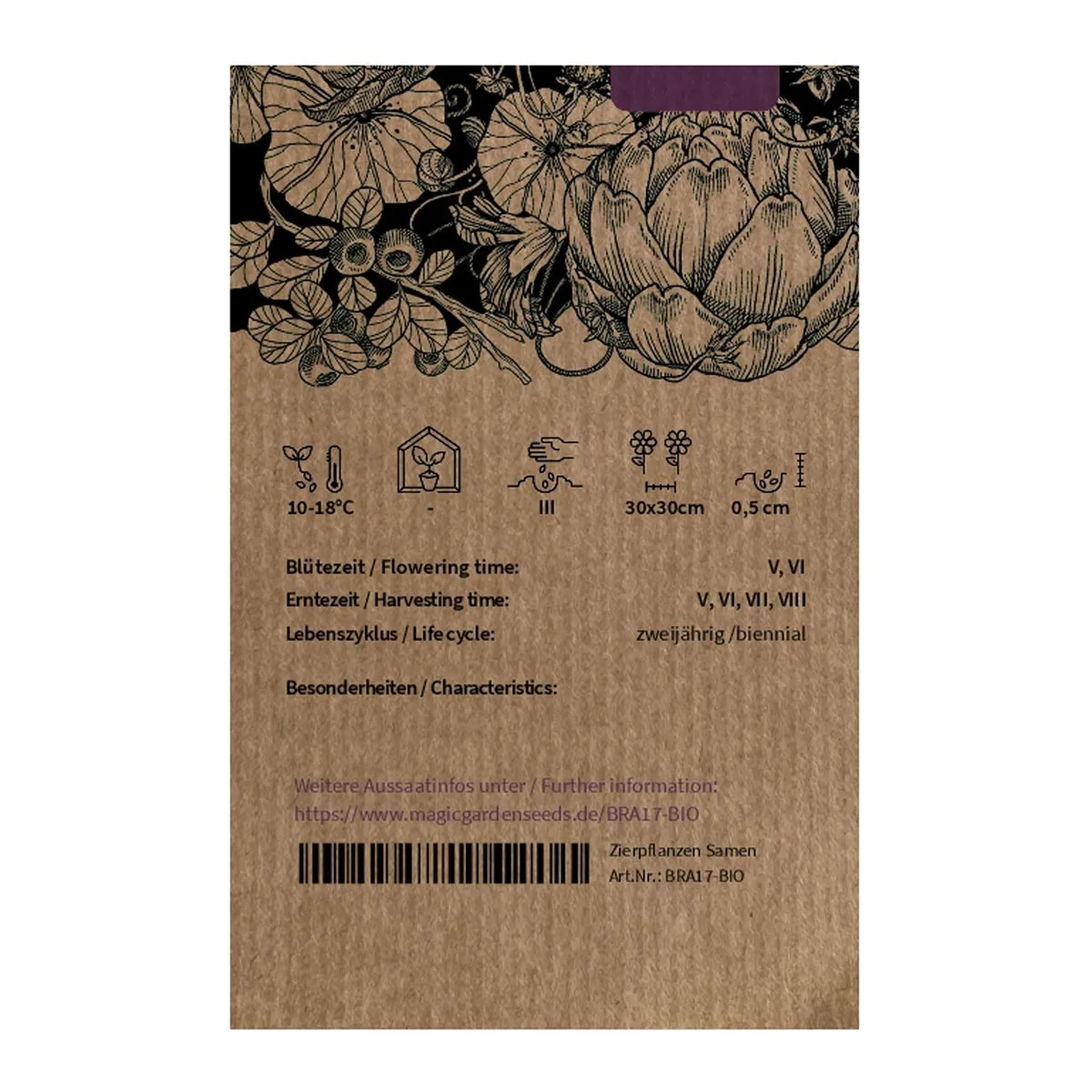
| Cycle de vie | Bisannuelle |
| Espèce | Brassicaceae |
| Période de floraison | Juin, Mai |
| Récolte principale | Août, Juillet, Juin, Mai |
Conseils de culture
| Période de semis en pleine terre | Août, Avril, Juillet, Juin, Mai, Mars, Septembre |
|---|---|
| Profondeur de semis | 0.5 cm |
| Température de germination | 10-18°C |
| Distance de semis | 30 cm |
| Distance entre les rangées | 30 cm |
Semis et entretien
Senf liebt nahrhafte Böden. Freilandaussaat zwischen März und Juli am besten in Reihen mit 30cm Abstand. Aussaattiefe 0,5 cm. Keimt nach ca. einer Woche.
Nach ca. 6 Wochen können die Blätter geerntet werden. Man schneidet sie bodennah ab und dann wird die Pflanze wieder neu austreiben, so dass bis zum Herbst regelmäßig geerntet werden kann. Ab ca. +25°C beginnt die Pflanze mit der Blütenbildung.
Nach ca. 6 Wochen können die Blätter geerntet werden. Man schneidet sie bodennah ab und dann wird die Pflanze wieder neu austreiben, so dass bis zum Herbst regelmäßig geerntet werden kann. Ab ca. +25°C beginnt die Pflanze mit der Blütenbildung.
Évaluations
Connexion
Aucun avis pour le moment. Serez-vous la première à écrire le vôtre ?